
Spending impact would be given prominent place in ballot initiatives under Colorado bill

© Svanblar iStock-146069215
A bill being advanced by Democrats in the Colorado General Assembly would add another wrinkle to the state’s fitful efforts at fiscal policy through the ballot box.
Under House Bill 26-1084, the “title” of citizen-initiated ballot measures — the paragraph-length text that appears on ballots and petition forms — would be required to include language estimating how state spending would be impacted if the measure is approved.
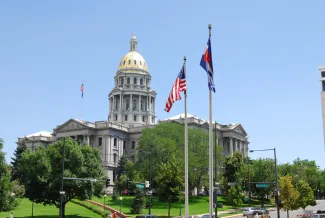
In a committee hearing Tuesday, state Senator Mike Weissman, an Aurora Democrat and an HB-1084 sponsor, likened the additional information to the nonpartisan fiscal analyses that lawmakers receive when considering legislation at the Capitol. Fiscal impacts that would otherwise be summarized in the state’s Blue Book, the ballot information booklet mailed to voters every year, would instead be “bumped up” to appear in the short-form ballot title.
“Voters will still be able to vote yes or no on the many things that they are called to vote yes or no on,” Weissman said. “One could react to the information that will be added by this title by thinking, that’s a good thing, that’s a bad thing, I don’t care. Those choices belong to the voters. We just propose to add a little bit more information.”
HB-1084’s title requirements would apply to any initiative that proposes to increase state expenditures but “does not identify and provide for a sufficient source of revenue” to cover the new spending. Initiative titles would be required to identify the three largest “program areas … for which state expenditures will likely be reduced” if the measure passes.
Health care, K-12 education and higher education account for the majority of Colorado’s spending each year, making up nearly 70 percent of the $44 billion budget lawmakers approved in 2025.

The bill follows the 2024 passage of Proposition 130, a measure backed by conservative advocacy group Advance Colorado, which required the state to appropriate $350 million to a new police officer training fund. That measure caused headaches for state budget writers already dealing with a billion-dollar budget crunch.
“(HB-1084) essentially just says, if you want a new program or a new priority, show us where the money is coming from,” said Senator William Lindstedt, a Broomfield Democrat and bill sponsor. “Because we’re in a dire fiscal situation in this state, and everything has trade-offs.”
As Democrats have tightened their grip on state government in recent years, Colorado conservatives — led by Advance Colorado, a so-called dark money group that does not disclose its donors — have increasingly turned to the state’s ballot initiative process to pursue their policy goals.
HB-1084 would go into effect later this year, and would not affect any approved or pending 2026 ballot measures. It also contains an exception for initiatives that would lead only to minimal or “administrative” expenditures.
Lawmakers on the Senate State, Veterans and Military Affairs Committee voted 3-2 along party lines to advance the bill to the full Senate. The bill previously passed the House on a 40-22 vote.