Vesicular stomatitis confirmed in Colorado horse, premises under quarantine

Public domain - Wikimedia
Colorado has become the second state in the country with a confirmed case of vesicular stomatitis virus (VSV) this year after the U.S. Department of Agriculture's National Veterinary Services Laboratory reported positive test results on May 7, 2026, on samples submitted from a horse in Montezuma County. The premises has been placed under state quarantine.
The infected horse was initially examined by the local accredited veterinarian, who contacted the state after suspecting VSV. A field veterinary medical officer with the Colorado Department of Agriculture then completed a foreign animal disease investigation and submitted samples to the federal laboratory.
©
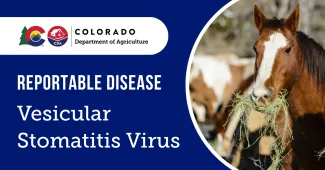
The positive horse is the only symptomatic animal among a small group of horses and cattle on the premises, the department reported. Clinical signs in the affected horse were lip and tongue lesions. The owner had noted increased midge activity in the week prior to the onset of symptoms.
The premises will remain under state quarantine until at least 14 days from the onset of lesions in the last affected animal.
Fifteen previous positive cases of vesicular stomatitis in 2025-26 have been diagnosed in multiple counties in Arizona since October 2025. The current situation report for all confirmed cases in the United States is available on the USDA Animal and Plant Health Inspection Service VSV website.
Vesicular stomatitis is a viral disease that primarily affects horses and cattle and occasionally swine, sheep, goats, llamas and alpacas. Transmission is not completely understood but includes insect vectors such as black flies, sand flies and biting midges. The incubation period ranges from two to eight days.
Clinical signs include vesicles, erosions and sloughing of the skin on the muzzle, lips, tongue, ears, teats, sheath or coronary bands. Excessive salivation is often the first sign of disease, along with a reluctance to eat or drink. Lameness associated with coronary band lesions or weight loss related to painful oral lesions may follow. Some species of wildlife, including deer and elk, may also be susceptible.
The Colorado Department of Agriculture is asking veterinarians to report any cases with clinical signs suggestive of VSV to the State Veterinarian's Office at 303-869-9130. All suspected non-equine cases — including cattle, sheep, goats, pigs and camelids — must be investigated by state or federal animal health officials. For suspected equine cases, owners are placed under a Hold Order, meaning livestock cannot leave the premises until testing is completed or the State Veterinarian releases the order.
With the index case confirmed, the Colorado State University Veterinary Diagnostic Laboratory in Fort Collins has been activated to receive and test samples from accredited veterinarians for equine cases through the National Animal Health Laboratory Network. Cost for PCR and complement fixation testing is $125 per horse.
Colorado veterinarians and livestock owners should contact the destination state when moving livestock interstate to ensure all import requirements are met. Some states may impose additional restrictions for horses and livestock coming from VSV-affected states, including timed certificates of veterinary inspection or additional testing. Canada does not allow equines or livestock to move directly from a VSV-affected state and requires animals to spend at least 21 days in an unaffected state before export.
Humans may become infected with VSV when handling affected animals or contaminated equipment, but such cases are rare. Owners of affected premises are advised to use protective clothing and gloves and to notify their healthcare provider of any exposure.
Updated guidance and case information is maintained on the Colorado Department of Agriculture's VSV webpage. Encountered sick or deceased wildlife should be reported to the local Colorado Parks and Wildlife office.