COP31 climate summit ends without a deal after fossil fuel standoff

The United Nations climate summit in Antalya, Türkiye, ended Sunday without an agreement. The talks ran about 44 hours past their scheduled close on Friday before they broke down over fossil fuels.
The final text did not mention oil, gas or coal, and the European Union and Panama formally objected to it. "I understand that there is no agreement on this text. For that reason, these decisions have not been adopted," the summit's president, Murat Kurum of Türkiye, told the closing session, according to UN News.
United Nations Secretary-General António Guterres called the outcome a setback. "There may be no consensus in the negotiating room. There is no ambiguity in the science," he said.
What went wrong
The summit, known as COP31, is the yearly meeting of countries under the UN climate treaty. They usually try to agree on a main statement, called a cover decision, that sets the direction for the year ahead. This year's was nicknamed the Antalya Pact.

© Arkadiusz Warguła - iStock-1890683226
An early draft called for a faster move away from fossil fuels. A version released Thursday, November 19, dropped every mention of them after Saudi Arabia and other oil-producing countries reportedly objected, Al Jazeera reported.
Speaking for the European Union, Irish minister Darragh O'Brien said the text "does not meet the moment." He added, "We will not accept negotiating backwards in time." The Marshall Islands, a low-lying Pacific island nation, also refused to support it. Poorer countries said the deal offered too little new money to help them adapt to a changing climate.
Saudi Arabia, speaking for the Arab League countries, defended the draft's support for technology that captures carbon dioxide and stores it underground.
What the deal would have done
The November 19 draft would have:
- Expressed "deep concern" that the world's peak warming is expected to pass 1.5 degrees Celsius above pre-industrial levels, the limit countries agreed to pursue in Paris in 2015.
- Set a goal of getting 35 percent of the world's energy use from electricity by 2035.
- Called for faster cuts in methane, a powerful heat-trapping gas that comes from oil and gas production, livestock and landfills.
- Encouraged programs that combine land management and drought resilience.
- Backed a UN goal of covering everyone on Earth with early warning systems for disasters by 2027.
- Launched a plan, running to next year's summit in Addis Ababa, Ethiopia, to find more money to help poorer countries adapt, and restated a call to at least triple that money by 2035.
Because the text was not adopted, none of those goals takes effect.
Farm talks stalled, too
Negotiations on agriculture, the only UN climate talks devoted to farming, broke down during the summit. Countries could not agree on a text that touched on trade measures and money for adaptation, and the talks were pushed to the next round of meetings in Bonn, Germany, Carbon Brief reported.
The United States sat out
For the second year in a row, the federal government did not send a delegation, Spectrum News reported. President Donald Trump has pulled the country out of the Paris Agreement twice, most recently in January 2025. A White House official said the summit "rejects reality."
More than 120 state and local leaders went instead, as part of a group called America Is All In, organizers said. They included Boulder Mayor Aaron Brockett. The group does not take part in the formal negotiations.
Drought and floods at home
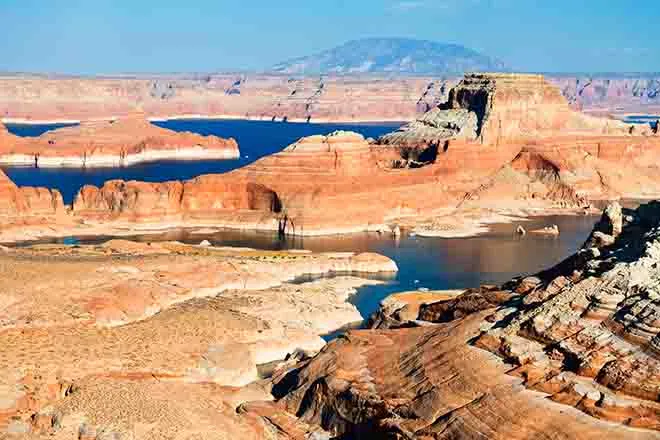
The draft's language on drought and disasters was aimed mainly at poorer countries, but Colorado has seen both extremes this year. In June, Governor Jared Polis declared a statewide drought emergency after the lowest snowpack on record, during what had been the state's warmest water year on record, the Press reported. At the time, nearly 93 percent of Colorado was in drought.

Rain this fall has eased conditions, especially on the eastern plains. On the U.S. Drought Monitor map released Thursday about 38 percent of the state was in drought, and Kiowa County was free of both drought and abnormal dryness. Exceptional drought, the worst category, still covers much of the central mountains, where early-season snowpack is well behind normal, the Press reported this week.
Southwest Colorado got the opposite problem. The remnants of Hurricane Trudy dropped about 4 inches of rain on the San Juan Mountains in two days in late October and sent rivers to record levels, the Press reported. A second round of flooding hit the same area beginning October 31.
Polis has asked President Trump for two major disaster declarations, one on October 31 for the first flood and one on November 20 for the second. State and federal damage reviews found 271 primary homes destroyed or left uninhabitable, and more than 6,300 people were under mandatory evacuation orders at the height of the flooding. As of November 20, the first request was still awaiting federal approval, the governor's office said.
Colorado's own goals
Colorado's climate goals are set in state law and do not depend on a UN deal. A 2019 law set goals to cut the state's greenhouse gas emissions 26 percent below 2005 levels by 2025 and 50 percent by 2030. A 2023 law added goals of 65 percent by 2035, 75 percent by 2040 and 90 percent by 2045, and raised the 2050 goal to 100 percent.
The state is behind schedule. Its latest emissions report, released last December, found emissions about 16 percent below 2005 levels as of 2023. State officials expect to reach the 2025 goal in 2027, Colorado Newsline reported.
What comes next
The collapse does not undo the 2015 Paris Agreement, under which each country sets its own goals for cutting emissions. Countries will try again at next year's summit, COP32, in Addis Ababa, Ethiopia.