Daily Audio Newscast Afternoon Update - February 11, 2026

© INDU BACHKHETI - iStock-1336427297
News from around the nation.
As Black History Month continues, Ohio educators say debates over diversity are creating classroom uncertainty. In Georgia, lawmakers push to protect homeowners from costly association fees, while Oregon bucks national trends with a surge in union membership.
Transcript
The Public News Service Tuesday, February 10th, 2026 Afternoon Update.
I'm Farah Siddiqui.
The search for Nancy Guthrie, the 84-year-old mother of Savannah Guthrie, is being complicated by the growing use of artificial intelligence and so-called deepfakes.
Law enforcement says fake ransom messages and manipulated images or audio are making it harder to verify proof of life.
President Donald Trump says the Gordie Howe International Bridge linking Detroit and Windsor will not open without new concessions from Canada, despite existing agreements governing the long-delayed project.
And beyond high-profile national stories, new data out today is giving communities a clearer picture of environmental risks closer to home.
More than 80 percent of watersheds in the United States lack adequate protection.
And now a new online tool will tell you if the river or creek in your neighborhood is in trouble.
Suzanne Potter reports.
The National Protected Rivers Assessment from the nonprofit American Rivers and conservation science partners shows that hundreds of rivers and creeks across California remain woefully underprotected.
John Zablocki with American Rivers says before now the data has been scattered.
Nobody's really had a reliable way to assess how protected rivers are.
They're really the most threatened system and also the least identifiably protected.
The tool includes more than 70 possible mechanisms of protection.
And while environmental data is helping shape policy decisions, new numbers are also reshaping how states think about education and earnings.
Indiana trails the nation in education attainment, but new data show Hoosiers slightly outperformed the national average when it comes to payoff.
Joe Ulery reports.
The latest A Stronger Nation report from Indiana-based non-profit Lumina Foundation aims to shift the focus from how many people earn credentials to whether those credentials lead to higher earnings.
Lumina's new national goal calls for 75 percent of adults in the labor force to hold a college degree or other credential of value by 2040.
NBC News data analyst Steve Kornacki explains Indiana clears that value bar more often.
43.8 percent right now.
That's a little bit above the national average work being done in the Hoosier state specifically on value.
You can see it paying off already.
Nationally, nearly 44 percent of adults meet that standard with With health insurance costs reaching an all-time high, experts are urging Illinoisans to know and use all of the health benefits they pay for.
Research shows more than half of Americans don't know the full scope of what their health insurance offers.
With Illinoisans facing an average 28 percent spike to their premiums, Paula Campbell with the Illinois Primary Health Care Association says it's never been more important for folks to be proactive about using all of their benefits.
They might get a gym membership discount, fitness trackers, or rewards for completing certain health screenings.
The state's parity laws ensure all health plans cover mental health services at the same rate as medical services.
I'm Judith Ruiz Branch reporting.
This is Public News Service.
More than 12,000 Alabama students have completed profiles through the Alabama Direct Admission Initiative.
As acceptance letters roll out in Alabama, admission counselors are giving tips on next steps for students.
Shantia Hudson reports.
So far, nearly 180,000 college admission offers have been sent statewide.
But now that acceptance letters are arriving, some students may be wondering what to do next.
Audrey Crawford with the University of Montevallo works in admissions and says this is a critical time for students to take action.
It's really important as a part of their next step is making sure that they connect with the admissions counselor that's assigned to them.
That's their best resource at each university.
Crawford says one of the first priorities should be completing the FAFSA.
She also encourages students to fill out any required supplemental scholarship applications.
Shantia Hudson reporting.
Researchers in the Midwest are studying the economic and ecological impacts of mature trees that have protected many Iowa farms for nearly half a century.
Asking farmers how natural wind breaks, rows of trees or shrubs that slow wind and create beneficial soil conditions have contributed to the success of farms.
The study will focus on crops, soil health, biodiversity and wildlife that wind breaks in the Midwest have supported for decades, including on the land owned by Nathan Anderson, a family farmer in northeast Iowa's Cherokee County.
Yeah, there's part of it that what's old is new again.
And that's really interesting to see that cycle.
But I think part of it is we've seen an increased need for those trees and the services that they provide.
The Savannah Institute received a five-year, $1.7 million grant from the U.S. Department of Agriculture to conduct the study in parts of Iowa and Illinois.
Many Coloradans got new health insurance plans this year, and experts say the best time to get to know your benefits is before you need them.
Beyond basic coverage, many plans offer free preventative services, mental health support, access to wellness apps, options that often go underused because you might not realize they're available.
Amy Jordan with UnitedHealthcare recommends becoming familiar with their health plan's online website, which can help you find providers, compare costs, and understand treatment options.
What are your benefits?
What is covered or what's not covered?
And what you can expect?
Preventative benefits are oftentimes covered for everyone.
And so really understanding what's included in that and what you have that coverage for.
Jordan in terms of your premium, O pays and deductibles, O insurance, and out-of-pocket maximums.
She says those and other health care terms are defined at the website JustPlainClear.com.
Mark Richardson reporting.
This is Farah Siddiqui for Public News Service.
Member and listener supported.
Heard on interesting radio stations, your favorite podcast platform, and you can find our trust indicators at PublicNewsService.org.The Public News Service, Wednesday, February 11th, 2026, afternoon update.
I'm Farah Siddiqui.
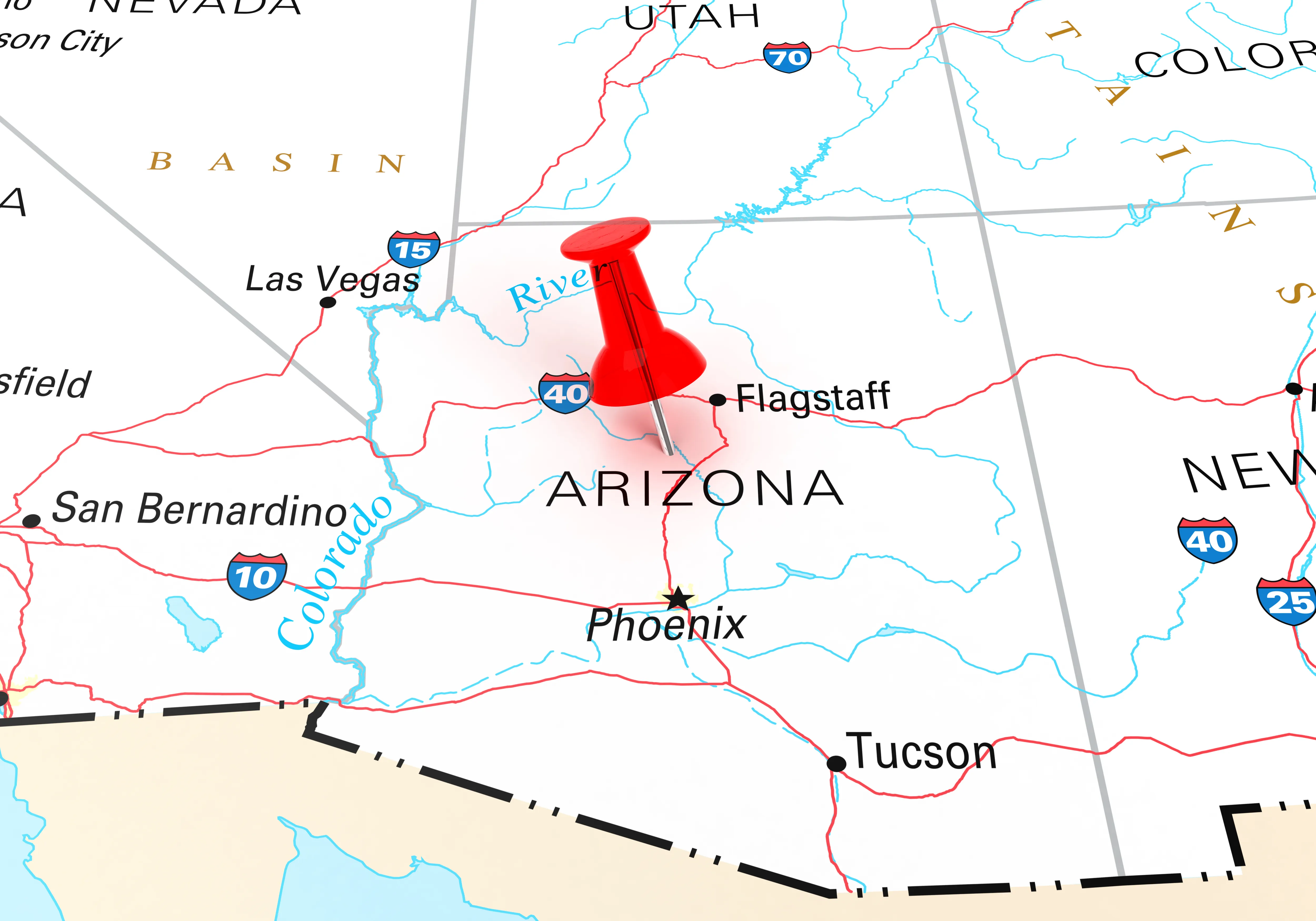
Authorities in Arizona have detained a person of interest and are searching a home in connection with the disappearance of Nancy Guthrie.
Her whereabouts remain unknown.
In neighboring Canada, nine people are dead and more than 25 injured after a mass shooting at a secondary school in British Columbia.
Police say the suspect was found dead.
As Black History Month continues, some Ohio educators say new state-level debates over diversity and inclusion are creating uncertainty in classrooms, even as many continue their work as usual.
Courtney Johnson is a school librarian in Columbus City Schools.
She says during Black History Month, she has continued to center black history and achievement for students despite growing concerns in other parts of the state.
I am operating as usual, celebrating black lives and black achievement and black joy.
I have my display out.
Black History Month is something to be celebrated and something that I think all students need to see celebrated.
Johnson says she recognizes that educators in other districts may not feel the same freedom.
She adds that recent state and federal actions around diversity, equity and inclusion have created confusion and concern for many teachers.
Supporters of the legislation say restrictions are meant to keep classrooms politically neutral, while critics argue the measures discouraged teaching about race, history and inclusion.
Georgia homeowners and lawmakers are rallying behind a slate of bills they say could help protect the American dream of owning a home.
Shantia Hudson reports at the state capital on Tuesday, residents shared stories of fines, fees and enforcement practices they say have pushed some homeowners to the brink of foreclosure.
State Representative Sandra Scott of Clayton County says the problem has grown too widespread to ignore.
No one, I mean no one should lose their home because of fees and assessment.
Scott adds the legislation is focused on stopping homeowners from losing their properties over association charges that go beyond mortgages and property taxes.
Union membership in Oregon has surged by 23 percent since 2013, placing it among the top 10 states for organized labor growth in the country.
As Isabelle Charlay reports, Service Employees International Union Local 49, which represents over 15,000 health care janitorial and security workers in the region, reflects this trend.
Union President Meg Nimi says they added 1,500 members last year.
She says she predicts that growth will continue.
More and more workers do want to come together and form unions, have protections on the job and advocate for the wages that they need to be able to pay their rent, pay for groceries and get to and from work.
Oregon is bucking the national trend, which has seen union membership fall by half since the 1980s.
Sixteen percent of the state's workforce is now unionized.
This is Public News Service.
The ag industry is fitting farmers with a host of tech gadgets to make their operations more efficient, but with environmental mounting one South Dakota farmer points to a new report calling for faster adoption of climate smart tools.
Environmental Defense Fund says it analyzed nearly 400 companies and innovations in the climate smart agriculture market.
Examples include remote sensing like the use of drones to monitor the health of crops.
Rodney Cook farms near Garriston and his machinery has automatic shutoffs to keep inputs in check.
He says he's always learning.
Just done things the way we've done them doesn't mean that they're necessarily the right or the best way.
Cook says upfront costs are not easy to balance for a farmer dipping their toes in these waters.
The EDF report cites similar barriers for widespread adoption of agricultural innovations.
The author stressed the need to protect and expand access to public-private partnerships, competitive grants, and demonstration projects so that farms of all sizes can try out these tools with confidence.
I'm Mike Moen.
The United States needs cement, but it faces some hurdles to producing more of it domestically.
North Carolina and other states would benefit from increasing the country's cement manufacturing.
As the U.S. seeks to bolster infrastructure and construction, cement production has actually declined, falling by 4 percent in 2024.
Meanwhile, 22 percent of the cement used in the country was imported.
Patrick Cleary is with Amrise, the country's largest cement producer.
He says North Carolina's growth puts it in a good position to benefit from domestic cement production.
We have increased year over year and continue to increase our production capacity to take advantage of what we believe is a great market in North Carolina where we see tremendous opportunity for growth around the advanced manufacturing, the biotech fields as well.
The Build America, Buy America Act was included in the 2021 Infrastructure Investment and Jobs Act, establishing a preference for American-made materials in infrastructure projects.
I'm Eric Tegethoff reporting.
A dual language program in the Winnebago Reservation in Nebraska is working to preserve the disappearing Ho-Chunk indigenous language.
It is disappearing on the reservation and across the Midwest.
The Winnebago Public Schools Dual Language Immersion Program seeks to keep the Ho-Chunk language alive by teaching elementary school kids about its importance, but not just by teaching them words.
Elementary school teacher Michelle LaMere says classrooms are returning to the way indigenous kids used to learn.
It was all relationship based.
They were all raised and taught by family members so that their teachers were people that cared for them, that respected them, that loved them.
And so we wanted to recreate that as much as possible.
There are currently fewer than a dozen speakers left in the state.
There are just over 6,000 members of the Winnebago Tribe of Nebraska.
This is Farah Siddiqui for Public News Service, member and listener supported.
Find our trust indicators at publicnewsservice.org.