A Rocky Mountain diorama represented Colorado at the 1876 Centennial Expo

© Evgeniy Grishchenko - iStock-2155580431
The eyes of the nation in spring 1876 turned to the Centennial Exposition in Philadelphia — formally the Centennial International Exhibition of Arts, Manufactures, and Products of the Soil and Mine, which was opened in a ceremony on the morning of May 10.
A crowd of nearly 80,000 attendees cheered as Grant declared the exposition opened, at which point bells rang out across the grounds, and a 100-gun salute was fired.
By the time it closed six months later, roughly 10 million people had attended the international exposition commemorating the 100th anniversary of U.S. independence, which had been modeled on previous events in London and New York and became a predecessor to later world’s fairs.
© ogichobanov - iStock-1088402018
The exposition’s 74-acre fairgrounds were full of monuments to industrial and scientific progress. Commissions representing every U.S. state, dozens of foreign nations and countless businesses and fraternal societies exhibited in the main halls and in dozens of specially erected buildings across the grounds. The main attraction in Machinery Hall was the Corliss Centennial steam engine, a 45-foot-tall, 680-ton behemoth that powered the entire building and was reported to have left the poet Walt Whitman “mesmerized in front of it for 30 minutes.”
Among the many inventions on display were new kinds of sewing machines, the world’s first commercially produced typewriter, and, at opposite ends of the cavernous Machinery Hall, experimental cone-shaped devices set up by Alexander Graham Bell, who had secured a patent for “improvement in telegraphy” — the first telephone — two months earlier.
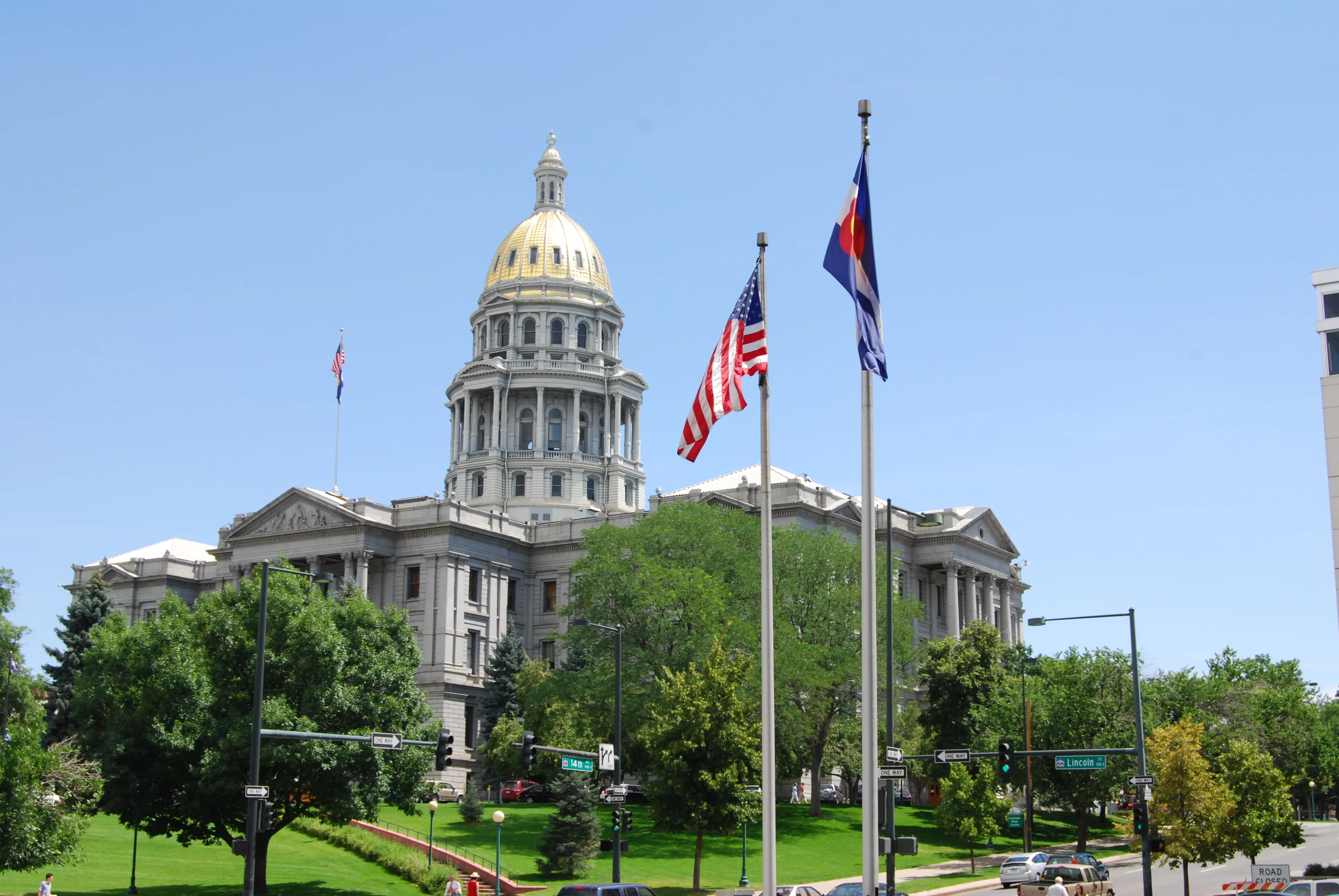
The Colorado Territory, which would become the state of Colorado halfway through the exposition, shared a two-story wooden exhibition building with Kansas, built in a lavish style with the help of funds from the Atchison, Topeka and Santa Fe Railway, which had completed a railroad linking the Kansas capital with southern Colorado earlier in the year.
In July, the Philadelphia Times pronounced it “the best special State display at the Exhibition.” Cornucopias of agricultural products filled the Kansas side, including an eight-foot-diameter representation of the Liberty Bell made from corn and wheat stalks, suspended above a bronze fountain in the building’s center. The Colorado wing featured specimens of ores ranging from a $60 lump of pure gold to a block of anthracite coal weighing more than 15,000 pounds.
Mrs. Maxwell’s museum
But the building’s main attraction was a museum display by naturalist Martha Maxwell, who, with the help of Colorado’s centennial commissioners, had shipped to Philadelphia more than an entire railroad car’s worth of the taxidermied animals she had collected while living in Colorado in the 1860s and 1870s.
Upon arriving, Maxwell labored for weeks to arrange dozens of stuffed specimens — including deer, elk, bighorn sheep, a bear and a mountain lion — atop a sculpted Colorado mountain scene. Articles praising the “Rocky Mountain huntress” appeared in magazines and newspapers as far away as Paris.
“It of course seemed very strange to the visitors who were admitted long before her miniature mountain-side was completed, to see a woman in a working-dress using paste, pulverized ore, water, lime, gravel and evergreens,” wrote Maxwell’s half-sister Mary Dartt in an 1879 account of her work.
“There was never an hour, through all the summer, when there were not numbers of interesting and appreciative people eager to know all about her and her adventures, about the country where all her specimens were obtained, its climate, resources, agriculture, and mines,” Dartt continued. “Many friends were thus formed and many tokens of esteem were received, both from persons in her own country and from visitors from abroad.”
Maxwell’s departure from the Colorado Territory meant the closure of the museum she had opened in Boulder in 1874, before moving to Denver the following year.
“Whatever benefits Colorado may receive from Mrs. Maxwell’s museum going to Philadelphia, Denverites regret to see it leave, for fear it will not come back,” observed the Denver Times on May 3.
Those fears would prove correct. After the Centennial Exposition closed in November, Maxwell was invited to exhibit her collection in Washington, D.C., the following year, and spent time in Boston and New York before her death in 1881.
Though much of her collection was lost before it could be preserved, Maxwell’s lifelike mountainside scenes would later be credited with helping to popularize the diorama format used to display animal specimens by natural history museums around the world, including the Denver Museum of Nature and Science.
Selected sources
The Rocky Mountain News, May 11, 1876
Dartt, Mary. “On the Plains, and Among the Peaks: or, How Mrs. Maxwell Made Her Natural History Collection” (1879)
Benson, Maxine. “Martha Maxwell: Rocky Mountain Naturalist” (1986)