Sustainable farmers urge high court to reject Monsanto immunity bid

© fotokostic - iStock-1324890919
Click play to listen to this article.
A coalition of sustainable farmers is urging the U.S. Supreme Court to reject a bid from Roundup maker Monsanto, owned by Bayer, to shield the company from cancer lawsuits concerning pesticides.
In an amicus brief, the group rebuts claims from agribusiness groups the industry would collapse if companies were required to warn consumers of cancer risks associated with products like Roundup, the world’s most widely used weed killer.
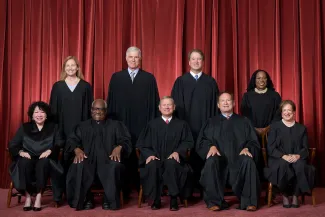
Memebers of the Supreme Court of the United States 2022 - WIkimedia - Public Domain
Liz Moran-Stelk, executive director of the Illinois Stewardship Alliance, said the long-term viability of American agriculture is endangered, not dependent upon the high use of glyphosate, Roundup's main ingredient. She cited harm to people, the planet and farmworkers.
"In an incredibly consolidated system, there's very few choices of the products that they can use," Moran-Stelk pointed out. "That absolutely requires the most information and the most protection that farmers and communities can get."
Monsanto argued the Environmental Protection Agency has determined glyphosate does not cause cancer in humans and has repeatedly approved the product’s label without warnings. Moran-Stelk noted in the absence of federal action, states have stepped up to take protective measures for their communities. She contended the case is an attempt to circumvent their ability to protect residents.
Represented by the advocacy organization FarmSTAND, the coalition includes 15 farmer organizations from across the country.
Nathan Leys, staff attorney for FarmSTAND, said with the rise of glyphosate-resistant weeds, farmers have been forced to use more toxic chemicals. He argued the cycle shows the dangers of dependence on glyphosate-based farming systems and suggested more sustainable approaches like cover cropping and crop rotation already exist.
"Organic farmers are expanding really rapidly," Leys observed. "It's one of the only sectors of American farming that is growing rather than shrinking, and there's no glyphosate used in that."
Leys emphasized the case is not about whether Bayer should be able to sell RoundUp but rather their responsibility to warn people about the health risks it could cause and accountability for damage already sustained. He said thousands of people blame Roundup for their cancers, with more than 100,000 lawsuits filed against Bayer and Monsanto.
"It's for the same reason that if you're at the grocery store and they just waxed the floors and didn't put up a yellow sign, and you fall and break your back, that you should be able to sue the store for their negligence," Leys underscored. "What Monsanto is saying, 'Well, sorry, we're just too special and that principle shouldn't apply to us.' And that really makes me angry."
Leys added he is uncertain about how much influence the brief will have on the Supreme Court’s decision, which could come this summer. He noted the group wanted to ensure the justices hear alternative perspectives from voices who might not otherwise be represented.