Colorado River governors express cautious optimism after ‘historic’ DC meeting

With the deadline to reach a water usage agreement looming, leaders from the seven Colorado River Basin states expressed cautious optimism that their “historic” meeting in Washington, D.C., will spur the compromise needed to reach a consensus.
U.S. Secretary of the Interior Doug Burgum called the meeting at the request of Arizona Governor Katie Hobbs, after the states blew past a Nov. 11 deadline to reach an agreement. The new Feb. 14 deadline was set by the Bureau of Reclamation, which manages water in the West under the Interior Department.
Arizona stands to see the largest cuts if the states can’t reach an agreement, because its Central Arizona Project is one of the newest users of the river water, making it legally one of the first to be cut.
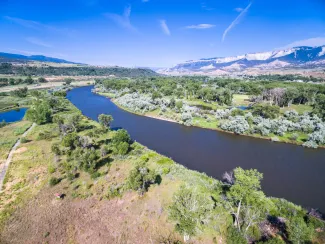
The Colorado River is a vital source of drinking water for 40 million people in the seven basin states, Mexico and 30 Native American tribes, and provides water for farming operations and hydroelectricity.
One of the biggest disagreements between the Lower Basin states — Arizona, Nevada and California — and Upper Basin states — Colorado, New Mexico, Utah, and Wyoming — is over which faction should have to cut back on their water use, and by how much.
“This is one of the toughest challenges facing the West, but the Department remains hopeful that, by working together, the seven basin governors can help deliver a durable path forward,” Burgum, the former governor of North Dakota, said in a statement. “Looking at this as a former governor, the responsibility each of them carries to meet the needs of their constituents cannot be understated, and we are committed to partnering with them to reach consensus.”
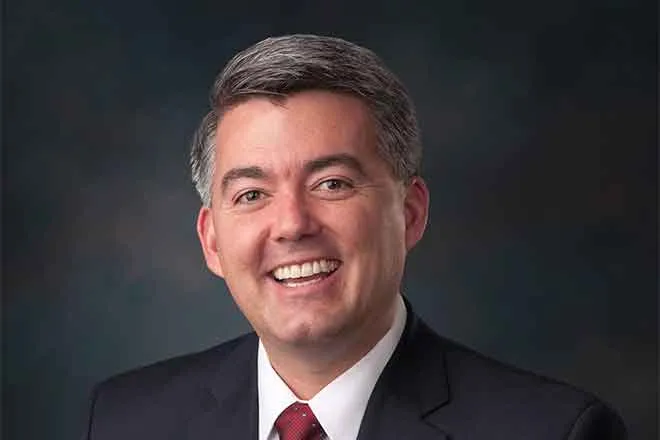
The meeting in the nation’s capital lasted more than two hours, Christian Slater, a spokesman for Hobbs, told the Arizona Mirror. The governors of all of the basin states attended the meeting, except for Governor Gavin Newsom of California, who had a prior family commitment and sent California Natural Resources Secretary Wade Crowfoot in his place.
“It’s actually a pretty historic meeting, and I don’t use those words lightly,” John Entsminger, Nevada’s Colorado River negotiator, said. “I’ve been working on the river for more than 25 years, and I’ve never seen that many governors and a cabinet secretary in one room talking about the importance of the Colorado River.”
In a post on X Friday afternoon, Hobbs described the meeting as meaningful and productive.
“I was encouraged to hear Upper Basin governors express a willingness to turn water conservation programs into firm commitments of water savings,” Hobbs wrote. “Arizona has been and will continue to be at the table offering solutions to the long-term protection of the river so long as every state recognizes our shared responsibility.”
© artzenter - iStock-509493427
Reaching a water usage agreement is vital to the basin states because the Colorado River’s water supply has been in decline for around 25 years due to a persistent drought spurred on by climate change. The decline is expected to continue into the future.
Water levels in the two major reservoirs on the river, Lake Mead and Lake Powell, have also been in decline for the last quarter century.
“One thing is certain: We’ll have less water moving forward, not more,” New Mexico Governor Michelle Lujan Grisham said in a statement. “So, we need to figure this out. There is still a lot of work ahead to get to an agreement, but everyone wants an agreement, and we’ll work together to create a pathway forward.”
Lower Basin states want all seven states to share mandatory water cuts during dry years under the new guidelines. But the Upper Basin, which is not subject to mandatory cuts under the current guidelines, argue that they already use much less water than downstream states and should not face additional cuts during shortages.
State negotiators for both the Upper and Lower Basin have said they would prefer a seven-state agreement over alternative river management options proposed by the federal government.
Tom Buschatzke, director of the Arizona Department of Water Resources, told reporters last week that the Grand Canyon State does not like the options proposed by the federal government as they place almost the entire burden for cuts on Lower Basin states.
The Colorado River Compact dates back to 1922, when the seven states made their initial agreement, allocating 7.5 million acre-feet of water each year to be shared by the Upper Basin states and another 7.5 million to be used among the Lower Basin states.
In 2025, for the fifth year in a row, the federal government imposed water allocation cuts on the Colorado River due to the ongoing drought and Arizona’s cut amounts to a loss of 512,000 acre-feet of water for the year.
“Today’s discussion was productive and reflected the seriousness this moment requires,” Colorado Governor Jared Polis said in a statement. “Since 2022, Colorado and the Upper Basin states have shown up to the negotiating table ready to have hard conversations. We have offered sacrifices to ensure the long-term viability of the Colorado River and we remain committed to working collaboratively to find solutions that protect water for our state, while supporting the vitality of the Colorado River and everyone who depends on it.”
Complicating matters this year is scant snowpack in the Rocky Mountains. Small snowpack means very little runoff, the source for almost all of Colorado’s water.
© iStock - ventdusud
The Lower Basin states have undertaken significant conservation efforts for Colorado River water since 2014 and have reduced their consumption from 7.4 million acre-feet in 2015 to just over 6 million in 2024.
The Upper Basin states have increased their usage in the past five years, from 3.9 million acre-feet in 2021 to 4.4 million in 2024.
Buschatzke, who attended the meeting in D.C. on Friday alongside Hobbs, has remained insistent that it’s time for the Upper Basin states to do their part. Hobbs’ statement indicated that the states had made some progress toward that.
If the states can’t reach an agreement and are forced to take one of the federal government’s proposals, it will likely lead to litigation — something that the states agree they would prefer to avoid.
“We all have to keep working together,” Entsminger said. “We have to find a compromise, and we have to find a way that the states stay in control of this process and don’t turn it over to the courts.”
Last year, Arizona put a total of $3 million to its Colorado River legal defense fund, and Governor Katie Hobbs’ proposed budget for this year would put another $1 million toward that fund.
Entsminger said that he thinks the meeting improved the chances of the states meeting the Feb. 14 deadline.
“Whether we have a final deal on February 14 or not, we’re still going to have to keep working,” he said. “That’s not to say I don’t think we’ll meet the deadline, but I do think we keep working until we have a deal, regardless of what day in the future that occurs.”
Jeniffer Solis of the Nevada Current contributed to this report.