Commentary - Is the Colorado River in a climate doom loop?

As negotiations and potential lawsuits over the Colorado River intensify, the U.S. Bureau of Reclamation – which is ultimately in charge of managing the river – would be smart to pull back from the high-stakes gambit and take a hard look at the science.
To make it easy for the Bureau, I’ve packed the best and most recent science into four tight paragraphs below.
First and foremost, in a new report from the University of Colorado Boulder, the best scientists in the business predict that flows in the Colorado River could drop 30% more by 2050 due to climate change, and that pre-climate flow levels are not coming back.
The drying of the Colorado River Delta has prompted tribes to stake their claim on the river and help conserve it, recognizing that traditional water management offers alternatives to the current damming approach.
Second, a new scientific study by the group, Tell The Dam Truth, describes how the massive damming of the Colorado River is a source of greenhouse gas emissions. Not only do the reservoirs and hydropower turbines themselves emit GHGs, but the dry-up of two million acres of wetlands in the Colorado River Delta in Mexico, caused by the dams, is the biggest source of GHG emissions in the whole system.
Third, another new scientific study in Nature Communications describes how in dryer climates impacted by climate change, human interventions to try to capture and manage water cause further drying. The study indicates that “pumping water for farms, clearing land, and damming rivers primarily intensified dry conditions.”
Finally, a recent scientific study in Nature Water indicates that as the climate warms, reservoirs will become warmer and more polluted and emit even more GHGs than they do now. The study estimates that reservoir emissions at the latitude of Glen Canyon Dam could increase between 20% to 80% by the end of this century depending on how bad climate change gets.
I call this a “climate doom loop,” where the damming and diversion of the Colorado River causes GHG emissions that dries out the Southwest, causing decision-makers to try to accelerate the damming and diversion that accelerates the GHG emissions and the drying. Further, hydroelectricity that uses dams and reservoirs to generate power causes GHG emissions, and those emissions increase as climate change intensifies.
In plain English: We caused a problem and our efforts to fix the problem are only making the problem worse.

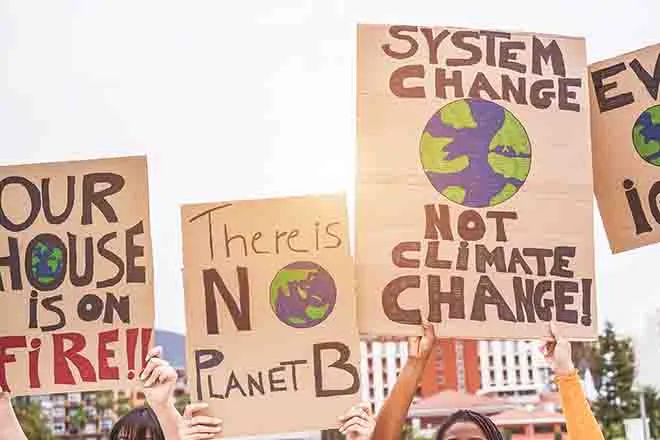
© iStock - http://www.fotogestoeber.de
In 1936, social scientist Robert K. Merton was the first person to formally analyze this concept, commonly known as the “law of unintended consequences.” This law also combines tightly on the Colorado River with what economists refer to as the “sunk costs fallacy” that drives bureaucracies to continue a failing endeavor because they have already invested so much time and money into it.
The U.S. Bureau of Reclamation’s current attempts to “save” Glen Canyon Dam, Powell Reservoir, and its hydroelectricity are perfect examples of these loops, laws and fallacies. Glen Canyon Dam has the unintended consequence of causing the emission of GHGs that further dry out the Southwest U.S., but the Bureau has so much time and money sunk into Glen Canyon Dam that they want to save it, which, as climate change intensifies, causes more emissions and drying that makes it even more unlikely to save the dam.
Likewise, the ongoing and proposed dam-building flurry in the Colorado River’s upper basin states of Colorado, Wyoming and Utah further exemplifies these loops, laws and fallacies. Denver Water is desperately trying to bring a new diversion online — the Gross Reservoir Expansion Project, for the stated purpose of “climate resilience” – that would further drain the Colorado River at the tippy-top of the Continental Divide, thus accelerating the downstream chaos all the way to Mexico and the Sea of Cortez.
Many of the same social scientists and economists also point to a solution for these problems that centers around looking forward rather than backwards. “Ignore the past,” they say, and instead ask this question: “Knowing what I know today, would I still choose to do this?”
The inconvenient truth of the climate doom loop on the Colorado River will force us to look forward, not backward, for solutions to address it. The sooner the Bureau of Reclamation starts looking forward, the faster those solutions will appear. To be clear, those solutions will be hard and controversial, but the opposite will be even more so.