Judge says Forest Service must consider grizzly bears before Bitterroot logging project can proceed

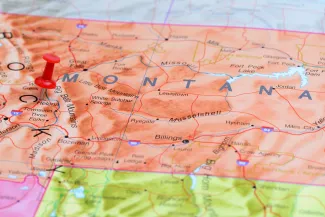
A thinning and logging project spanning more than 55,000 acres in the Sapphire Mountains of the Bitterroot National Forest has been paused after a federal magistrate judge found the United States Forest Service had failed to properly analyze new evidence of grizzly bears being in the area.
Two groups, Alliance for the Wild Rockies and Native Ecosystems Council, filed the legal challenge, which was assigned to federal Magistrate Judge Kathleen DeSoto regarding the project, which started in 2017.
The conservation groups challenged the project on a number of different levels, saying the United States Forest Service had failed to take into account the project’s effect on pine martens and pileated woodpeckers. Furthermore, they alleged the forest project would negatively impact elk and wolverine which live in the area without properly documenting the impacts or considering other alternatives.
However, DeSoto, in a 59-page order, largely disagreed with the conservation groups, saying that the Forest Service had indeed considered the impacts and followed the law. DeSoto also leaned on a recent ruling by the U.S. Supreme Court which says that agencies like the Forest Service should be given considerable deference when it comes to decisions and that it represents a sort of “course correction” on laws involving the National Environmental Policy Act.
Quoting from the U.S. Supreme Court, DeSoto emphasized, “Courts should afford substantial deference and should not micromanage those agency choices so long as they fall within a broad zone of reasonableness.”
She explained in her ruling that judicial deference extends in cases where a court may disagree with the agency’s determination on how they arrived at certain decisions that comply with the federal law, so long as the agency drew a “reasonable and manageable line.”
DeSoto went back to that recent ruling several times as she said the U.S. Forest Service had considered nearly all of the concerns raised by the conservation groups, except a contradictory decision about whether the project, named “Golden Butterfly,” affected grizzly bears.
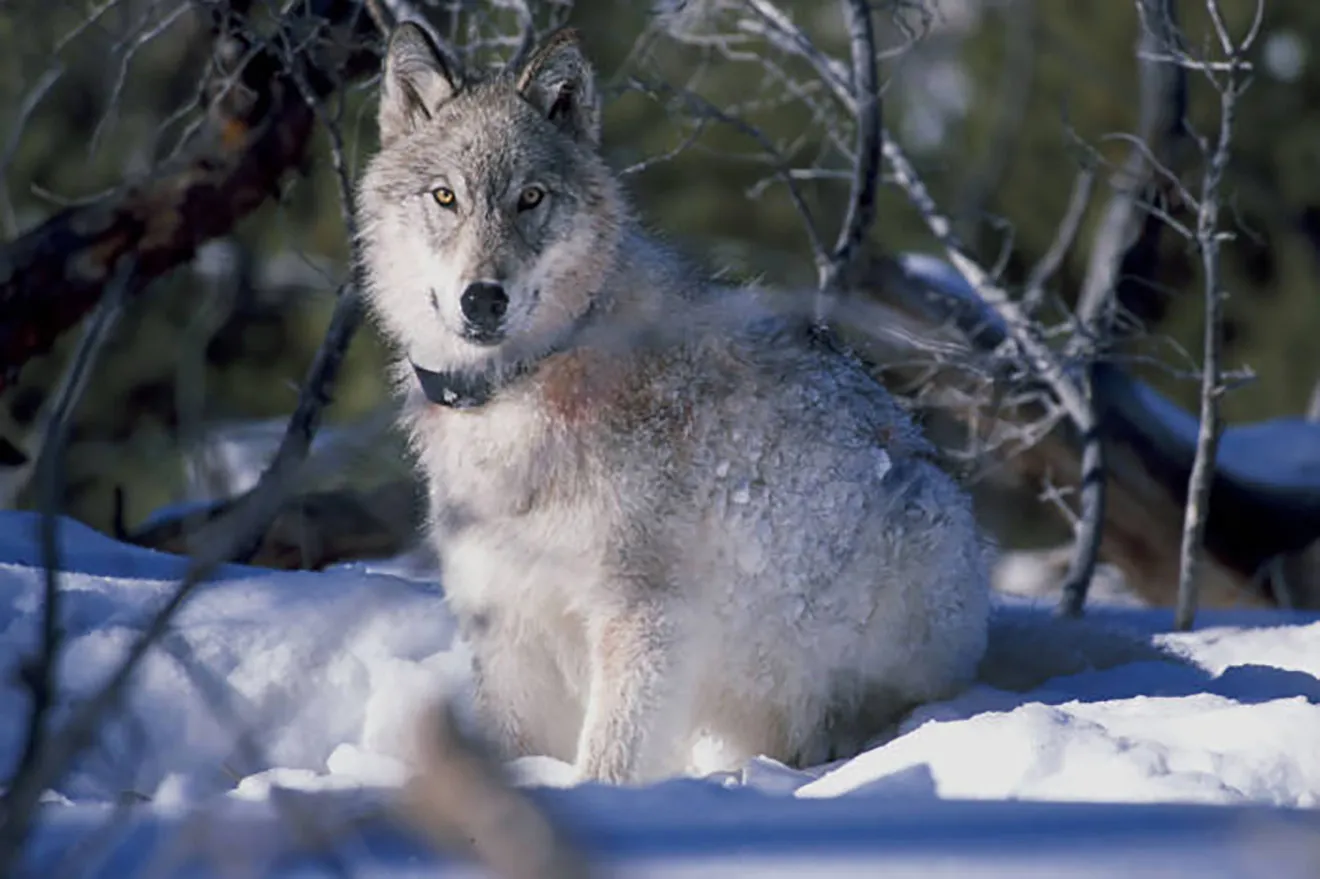
When the project began, the area was not known as a part of grizzly bear habitat. However, in the past three years, there have been reported and confirmed sightings of grizzly bears there. DeSoto and the conservation groups pointed out that documents the U.S. Forest Service had put out confirmed that grizzly bears may be in the area, while both sides disputed whether bears were once again moving into the area or whether they were just passing through the area for a different habitat.
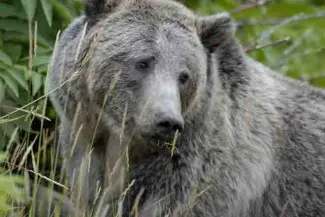
USFWS - Terry Tollefsbol
But because the U.S. Forest Service had confirmed in its own documentation grizzly bears have been a part of the area, DeSoto said that an environmental impact statement that had been prepared by the agency and said it would have no bearing on the bears because it was not bear habitat needed to be re-evaluated. She also said that part of the provisions of reconsidering that aspect may require a public comment process as well.
“This is not to say that the court endorses all of plaintiffs’ assertions regarding the need for a supplemental environmental impact statement. The court merely finds that the supplementary report contains an obvious inaccuracy that speaks to the heart of the issue,” DeSoto wrote. “The (Forest Service’s) determination that supplemental NEPA analysis was not necessary was premised on apparently inaccurate information. Accordingly, the decision not to engage in additional NEPA analysis was arbitrary and capricious.”
DeSoto sent the case back to the Forest Service to complete the analysis of the impact on grizzly bear, noting that the additional work may not cause substantial delay and should mean the rest of the project will move forward.
The conservation groups had also raised concerns about old-growth forests and impacts on wolverines, but DeSoto dismissed those concerns as well, saying that the U.S. Forest Service had properly considered those species and made a reasonable finding.